

Introduction
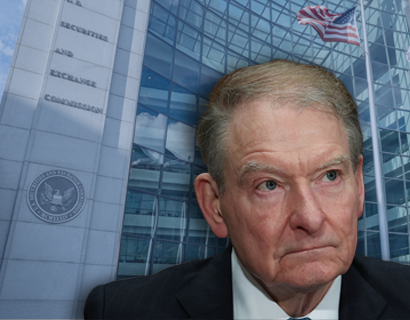
Securities and Exchange Commission (SEC) Chair Paul Atkins is pursuing a sweeping deregulatory agenda. In light of his record before becoming Chair, neither his determination to spend his tenure undoing investor protections nor the financial industry’s support for much of his agenda is surprising. What is surprising is the extent to which parts of Chair Atkins’s agenda face opposition not just from investor advocates but from a wide range of firms across the financial industry.
The breadth of firms opposing Chair Atkins’s rule proposals is matched only by the breadth of issues that those rule proposals cover. From rules about the frequency of disclosures to rules about the substance of those disclosures, and from rules about crypto to rules about prediction markets to rules about 24/7 trading, major financial firms say Chair Atkins’s agenda goes too far. Indeed, in some cases it is harder to find firms that support the rules than firms that oppose them.
This being so, one would think that the SEC would reconsider some of its rule proposals. Given that Chair Atkins has already responded to criticism from the public by saying that investors misunderstand his proposals, however, we are not optimistic. Still, the fact that so many major financial firms find parts of his agenda to be flawed shows just how extreme that agenda is.
Semiannual Reporting
The most prominent example of opposition to Chair Atkins’ agenda is with respect to his proposal to allow public companies to report financial information semiannually rather than quarterly. Although the opposition of over 200,000 retail investors to the proposal has received most of the attention, the fact is that the financial industry is no more supportive of depriving investors of the quarterly reports to which they have been entitled for over 50 years. Institutional asset managers, hedge funds, and large trading firms have all come out against the semiannual reporting proposal.
- The Investment Company Institute urged the SEC to retain mandatory quarterly reporting due to the “drawbacks associated with a potential reduction of decision-useful public company disclosure for investors” and its “concerns about the proposal’s potential impact on investment decision making, comparability of information across issuers, volatility, price discovery, and information asymmetry in the marketplace.”
- The Managed Funds Association told the SEC to withdraw the semiannual reporting proposal because it views quarterly financial reporting as “a core feature of the U.S. disclosure framework that provides investors with critical, timely, decision-useful information about a company’s financial performance and evolving business conditions” and a “switch to semiannual reporting would harm investors and market integrity by increasing information asymmetries, delaying price discovery, weakening corporate accountability, and impairing the efficient functioning of public markets.”
- The Securities Industry and Financial Markets Association encouraged the SEC not to move forward with the proposal because quarterly reporting “remains an important source of timely information for investors” and eliminating quarterly reporting “could result in a range of unintended consequences” that could “negatively impact investor outcomes, market quality, and the Commission’s broader capital formation goals.”
- The Committee on Capital Markets Regulation said the SEC should maintain the current mandatory quarterly reporting framework because quarterly reporting “facilitates the ability of market participants to monitor corporate management,” increases “the overall availability to public markets of material information about public companies,” and provides “valuable supplemental information to markets that Form 8-K disclosures, including voluntary earnings releases, do not necessarily provide”; conversely, “reducing the frequency of corporate disclosures could lead to information asymmetries that result in reduced liquidity, increased volatility, and reduced disclosure comparability.”
- Citadel stated that the proposal would severely undermine our markets and would “make the U.S. capital markets less transparent, less efficient, and less competitive, deprive investors of timely information, increase the cost of capital, and erode one of the core features that has helped make the U.S. public markets the gold standard globally.”
Climate Risk Disclosures
The semiannual reporting proposal is not the only proposed rule that financial firms oppose because it would deprive investors of material information. Another such proposal is the SEC’s proposed rescission of its climate risk disclosure rule. Investor advocates and public pension funds certainly oppose the rescission of that rule, but so do large financial firms.
- Vanguard told the SEC that climate risk disclosures “enable more accurate valuations and efficient price discovery,” allow investors “to evaluate how these risks might affect a company’s business and operations,” improve usability and reduce complexity for investors, and “provide investors with important information about material climate risks.”
- TIAA informed the SEC that it continues to believe “that maintaining access to high-quality, comparable, and reliable climate risk data is essential to sound investment decision-making, responsible stewardship of our clients’ assets, and the proper functioning of capital markets,” that its “conviction in the investment relevance of climate risk data has only grown stronger in recent years, reflecting both our own investment experience and the evolving expectations of our clients,” and that the “lack of federal disclosure requirements will increase costs for investors” and “potentially lower the quality of such data.”
- Neuberger urged the SEC to reconsider the proposed rescission because “climate-related information is financially material in many cases,” the “mandatory disclosure of such information provides investors with decision-useful information that investors cannot reliably expect to be available through voluntary channels,” and “standardized, decision-useful disclosure of financially material risks, including climate-related risks, is foundational to our ability to analyze investment risks and opportunities, and allocate our clients’ capital efficiently while pursuing the pecuniary objectives that they have set for us.”
The Trade-through Rule
Chair Atkins’ desire to rescind rules that protect investors is not limited to disclosures. He also wants to rescind the so-called “trade-through rule,” which protects the prices investors receive on their trades by prohibiting exchanges from executing trades at worse prices than those available on other exchanges. Again, both investors and financial firms oppose this proposal.
- The Managed Funds Association told the SEC that the proposal “would significantly alter a market structure that currently delivers strong outcomes for institutional investors without adequately demonstrating that the benefits of wholesale rescission would warrant the resulting risks,” that the proposal does not adequately address how the markets would “function following rescission, including the implications for best execution” of customer orders at the best prices, and that the proposal lacks a “complete analysis of the potential consequences for investors and market quality,” including a clear demonstration that any changes “will improve, rather than risk degrading, market quality and investor outcomes.”
- The Securities Industry and Financial Markets Association warned the SEC that its members “face genuine challenges in understanding what U.S. equity market structure would look like if the Proposal were adopted, particularly without greater clarity regarding the downstream consequences of rescission,” that the proposal has the potential to introduce “unintended consequences for displayed liquidity, price discovery, and investor protection,” and that the proposal’s economic analysis “does not fully evaluate several issues that are central to assessing the likely effects of rescinding” the trade-through rule.
- The Security Traders Association informed the SEC that it “believes that the potential risk of unforeseen negative consequences will become apparent immediately upon full rescission” of the trade-through rule, that “it is extremely difficult to conclude that its removal will improve” the prices that exchanges display or enhance the quality of the best bid or offer available to investors, and that the proposal “could materially affect investor understanding and confidence” that their orders “will not be executed at inferior prices.”
Tokenization
In addition to rescinding existing rules, Chair Atkins wants to relax the application of rules that protect investors. Nowhere is that more apparent than with respect to the crypto industry and the SEC’s recently proposed “innovation exemption,” which would exempt crypto companies that want to facilitate tokenized stock trading from the federal securities laws. The warnings about the risks of this exemption emanate not simply from investors but from the financial industry itself.
- The Securities Industry and Financial Markets Association issued a statement following the release of the innovation exemption in which it said that it was “concerned about its impact on investor protection and market integrity,” as the exemption “could allow multiple tokenized versions of U.S.-listed securities to trade in parallel, lightly regulated markets, in ways that could lead to investor confusion and harm, as well as price and liquidity fragmentation,” without sufficient guardrails “to protect investors and market quality.”
- Citadel warned the SEC, before it issued the innovation exemption, not to grant “broad exemptive relief from the longstanding statutory definitions of an ‘exchange’ and ‘broker-dealer’ for those seeking to facilitate the trading of tokenized U.S. equities,” which is what the exemption did, because to do so would facilitate “the emergence of a ‘shadow’ U.S. equity market by not requiring the registration of intermediaries that otherwise meet the” definitions and would “allow tokenized U.S. equities to trade completely outside of the national market system, fragmenting liquidity and undermining core investor protections.”
- The World Federation of Exchanges, which includes Nasdaq as a member, also told the SEC before it issued the innovation exemption that “exemptive relief that dilutes the core protections the securities laws were designed to provide or distorts competition through granting selective advantages rather than fostering innovation within a level-playing field, will undoubtedly have negative – potentially acute – consequences for US markets,” that it would be inappropriate to grant an exemption from registration requirements to “trading platforms that simply do not wish to be saddled with the requirements of being an SEC registrant,” and that the SEC should not “give exemptive relief to firms trying to circumvent established regulatory principles that have existed for decades and for very good reason.”
Prediction Markets
Under Chair Atkins, the SEC has long been a cheerleader for the crypto industry, but it is now on the verge of becoming a cheerleader for prediction markets too. The SEC appears to be on the cusp of approving so-called novel exchange-traded funds (ETFs) that would invest in event contracts on prediction markets and of allowing the CFTC to regulate event contracts on public company events. Yet the financial industry recognizes that prediction market ETFs would largely be used for gambling and that event contracts on public company events should be regulated by the SEC.
- FCLT Global urged the SEC to “disallow the ETF wrapper as a vehicle for prediction markets because “event contracts are wagers, not investments,” retail investors “accustomed to the ETF format as a marker of investments may not recognize that they are holding a zero-sum wager rather than a claim on productive activity,” and packaging these products as an ETF aimed at retail investors “advances neither capital formation nor the long-term wealth creation that the federal securities laws and the ETF structure intend to further.”
- Schwab warned the SEC that novel ETFs investing in event-based strategies “introduce materially different challenges that warrant additional scrutiny” compared to traditional ETFs, “raise important questions about alignment with the Commission’s mission to protect investors, maintain fair, orderly and efficient markets, and facilitate capital formation,” and necessitate that the Commission consider “whether a strategy characterized by an unclear capital-formation purpose, the risk of losing all or substantially all of its value upon a set date, heightened susceptibility to market manipulation and attendant surveillance challenges, and the potential for contested settlement is appropriate for a Commission-regulated product broadly available to retail investors.”
- Citadel told the SEC that permitting the CFTC to regulate event contracts on public company events, which track public companies’ key performance indicators (KPIs), would result in “a parallel shadow market linked to U.S. equities that operates outside the surveillance and enforcement ecosystem specifically designed to protect market integrity,” enable insider trading, and “leave investors without the full benefit of important protections and market-integrity safeguards developed specifically for those markets.”
24/7 Stock Trading
As with crypto and prediction markets, Chair Atkins touts 24/7 stock trading as an “innovation” that the SEC supports. Other than stock exchanges that stand to profit from longer trading hours, however, almost no other part of the financial industry supports this innovation. And some exchanges themselves oppose 24/7 stock trading and warn of the risks it poses to investors.
- German exchange operator Deutsche Boerse warns that 24/7 stock trading could damage markets by fragmenting liquidity and says that large investors want buying and selling to be concentrated at particular times, which boosts the efficient operation of the markets.
- Wells Fargo calls 24/7 trading “literally the worst thing in the world,” because it is “an action that single-handedly gamifies the stock market even more than it has already become,” is “the epitome of making trading even more like gambling,” and “makes no sense at all.”
- JPMorgan, Bank of America, and Morgan Stanley have all had executives anonymously voice concerns about the risks and costs associated with 24/7 trading.
- State Street and BNY executives are also skeptical about 24/7 trading and have questioned the guardrails, regulations, and rules of the road during overnight trading sessions.
- BlackRock says that overnight sessions are “less liquid than normal market hours,” which means “wider bid-ask spreads, increased levels of volatility, and higher trading costs.”
Conclusion
The above examples show that Chair Atkins’ hostility to investors is so great that even the financial industry believes his agenda goes too far. Yet it appears that nothing will stop Chair Atkins in his quest to undo investor protections. After the SEC made it easier for companies to exclude shareholder proposals from a vote, Chair Atkins voiced frustration that more companies had not acted to avail themselves of these opportunities to silence shareholders. Rather than recognizing that companies did not want to exclude shareholder proposals, Chair Atkins said that “if companies remain lackadaisical and refuse to pick up the substantial tools that we have laid on the table to help them do so, then I do not know what more we can do to intervene in their stead.” His solution was to propose eliminating the longstanding rule that facilitates the ability of investors to submit proposals entirely. This proposal is so recent that it remains to be seen whether major financial firms will join investor advocates in opposing it. Regardless, the opposition those firms have already registered to large parts of Chair Atkins’ agenda shows how extreme that agenda is.


